Waterfront Living In Marina Del Rey: Home Options Explained
June 4, 2026
June 4, 2026
If you picture Marina del Rey as a simple choice between a condo and a house, you may miss what really matters. This waterfront market is more layered than that, especially if you are comparing it with other coastal Los Angeles options. When you understand how Marina del Rey is planned, what home types are most common, and which details drive value, you can make a much sharper decision. Let’s dive in.
Marina del Rey is not a typical lot-by-lot coastal neighborhood. It is an unincorporated, County-owned harbor community shaped by the Marina del Rey Land Use Plan and Specific Plan, which are part of Los Angeles County’s certified Local Coastal Program. That planning framework helps explain why the area feels more like a designed waterfront district than a patchwork of detached homes.
That structure also affects what you are likely to find on the market. County information shows Marina del Rey has 7,116 residential units, and the area includes long-term ground lease management as part of its development pattern. In practical terms, your home search here is often about understanding the project, ownership setup, and waterfront orientation, not just the unit itself.
Detached homes are the most limited, house-like option in Marina del Rey. If you want more privacy, fewer shared walls, and greater control over interior and exterior changes, this category may appeal to you. The tradeoff is that these homes are generally harder to find because the marina’s land-use pattern leans toward multifamily and townhouse-style development.
For some buyers, that scarcity is part of the appeal. A detached home can offer a more traditional residential feel while still keeping you close to the harbor. But in Marina del Rey, this is usually the niche option rather than the default one.
Townhomes often sit in the middle. They can give you a more private, residential feel than a condo, while still reducing some of the maintenance that comes with a detached property. Private entries and garage parking are often part of the appeal for buyers who want something home-like near the water.
That said, townhome living still requires a close look at shared obligations. California Department of Real Estate guidance notes that planned developments may include HOA-owned roads, recreation facilities, or other common areas. If you are considering a townhome, the monthly dues, rules, and reserve strength matter just as much as the floor plan.
Luxury condos are often the clearest path to a lock-and-leave waterfront lifestyle. They can also be one of the easiest ways to access direct marina views, building services, and amenity-rich living. For buyers who travel often or want a second home with less day-to-day upkeep, that can be a major advantage.
Condo ownership also comes with shared financial and governance considerations. In a condominium project, owners hold an undivided interest in common areas, and some spaces like parking or certain outdoor areas may be designated for exclusive use. That is why it is so important to review HOA dues, reserves, the public report, and the governing documents carefully before you commit.
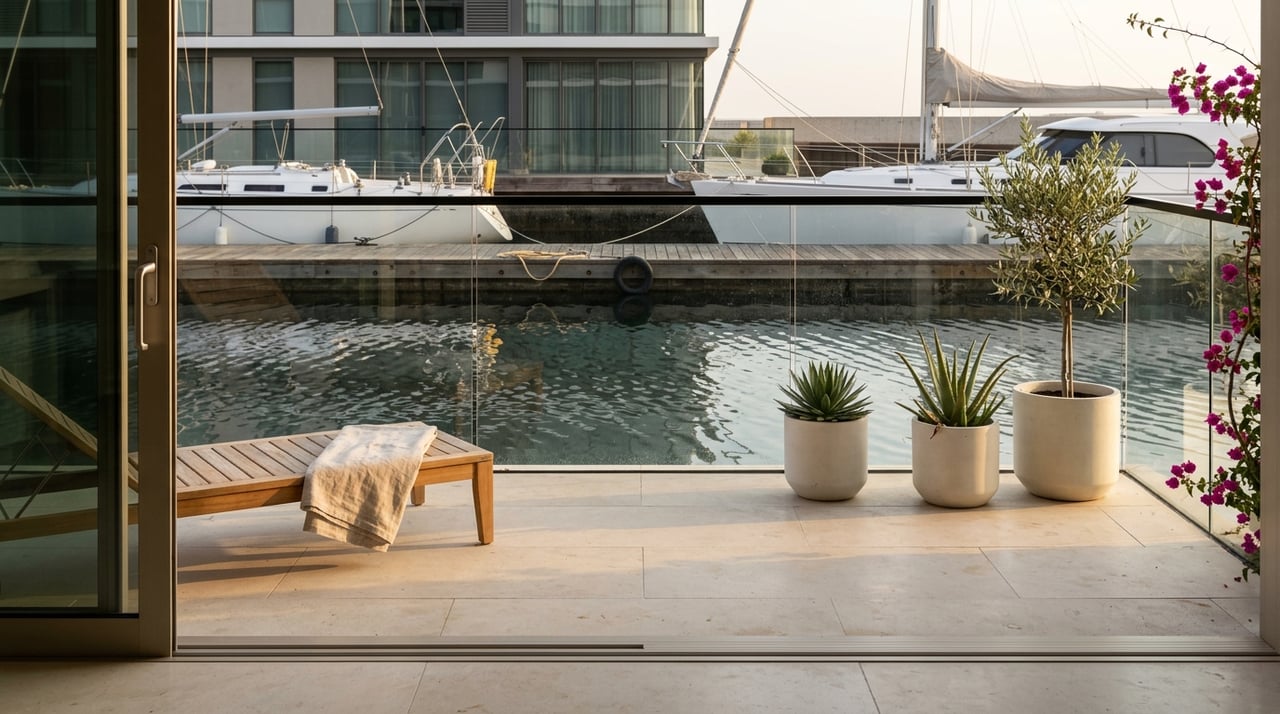
In Marina del Rey, waterfront value is tied to more than a listing description. County design guidelines identify Bora Bora Way, Palawan Way around Mariners Bay, and Via Marina at the North Jetty View Pier as the waterfront residential roads where motorists have direct marina views. The Specific Plan also protects shoreline access and view corridors, which helps explain why certain locations feel especially prized.
If you are comparing homes, focus on the actual relationship to the water. A front-row setting, a protected marina view, or visual access shaped by the planning framework can have a meaningful effect on long-term appeal. In this market, view value is often very specific.
A marina address does not automatically mean a slip comes with the property. Los Angeles County states that Marina del Rey has more than 4,600 boat slips across 23 marinas, and each anchorage is independently managed by a dockmaster or management entity that handles pricing and leasing. That means slip access is highly project-specific.
If boating is part of your lifestyle, this should be one of your first due-diligence questions. You will want to confirm whether there is any slip access, how it is leased, whether it is transferable, and what the ongoing costs look like. For many buyers, boating convenience is a major part of the lifestyle equation, but it should never be assumed.
The harbor’s operating rules also matter. County regulations note an average harbor depth of 15 to 21 feet, a maximum harbor speed of 5 nautical miles per hour, no anchoring, and no-discharge requirements. Those details can shape what kind of boating setup fits your needs.
In Marina del Rey, HOA dues often represent more than routine maintenance. They may reflect the level of service, building staffing, amenity access, shared-area upkeep, and the overall quality of the living experience. In a highly planned waterfront environment, that can have a direct effect on both lifestyle and resale appeal.
The California Department of Real Estate also notes that HOA assessments can become liens and that common areas are often owned or controlled by the association. That makes reserve health, budgeting, and management quality important parts of your review. A higher monthly cost may be justified in one building and less compelling in another, depending on what you are actually getting.
One of the most important Marina del Rey questions is whether a property is fee simple, leasehold, or part of a project with separate ground-lease obligations. Because County-managed ground leases are part of the area’s broader development structure, ownership is not always as straightforward as buyers expect.
This can affect financing, monthly carrying costs, and resale strategy. It is one of the clearest examples of why Marina del Rey should be approached as a specialized waterfront market. Before moving forward, make sure you understand exactly what you are buying and how the ownership structure works.
A detached home may be the right fit if you value privacy, autonomy, and a more traditional residential setup. You may also prefer it if you want fewer shared rules and more control over changes to the property. In Marina del Rey, that choice often comes with a more limited supply and a different search process.
For some buyers, that tradeoff is worth it. If your priority is a house-like environment near the water rather than a service-driven building lifestyle, this option can stand out.
A townhome may be the sweet spot if you want a private entrance and a more residential footprint without taking on the full maintenance load of a detached home. It can work well if you split time between properties or want a practical coastal base with a little more separation than a condo typically offers.
This option can be especially appealing if you like a lower-profile living style but still want proximity to the marina. Just remember that townhouse living still comes with project-level rules and shared costs, so the details matter.
A luxury condo may be the strongest match if you want a polished lock-and-leave lifestyle. For frequent travelers or second-home buyers, the convenience can be hard to beat. Marina views, shared amenities, and reduced exterior maintenance often make condos the easiest way to enjoy the waterfront without adding complexity.
This option is also well suited to buyers who prioritize service and convenience over maximum privacy. If your ideal coastal home is about ease, access, and simplicity, a condo may be the clearest answer.
Part of Marina del Rey’s appeal is how practical the setting can feel. County information notes that the marina is only 4 miles from LAX, and the area includes the Marvin Braude Coastal Bike Trail as well as a seasonal free Beach Shuttle connecting Playa Vista, Fisherman’s Village, Mother’s Beach, and Venice Beach. For buyers who want a coastal base with easier movement around the Westside, that is a meaningful advantage.
The area also offers day-to-day public amenities that support waterfront living. Marina Beach, also called Mother’s Beach, is a man-made no-surf beach with picnic areas, barbecues, playground equipment, showers, restrooms, and nearby restaurants. Burton Chace Park and public parking areas also support access for residents and guests.
If you are in the research stage, the best comparison is usually not house versus condo alone. In Marina del Rey, the smarter framework is water orientation, boating access, and ownership structure. Those three factors often tell you more than square footage by itself.
That is especially true in a planned harbor community where location, view corridors, HOA quality, and lease structure can all shape your ownership experience. Once you narrow your priorities, the right home type often becomes much easier to identify.
If you are exploring Marina del Rey and want clear guidance on how each property fits your lifestyle goals, The Malibu Life offers high-touch buyer representation across coastal Los Angeles with the discretion, market perspective, and concierge service luxury clients expect.

Four ocean-inspired murals have popped up around town. Here's where to find them.

From Sinkhole Headlines to Sandy Shores: Our Latest Look at Malibu’s Beaches

A closer look at Malibu’s elusive gray foxes

Pickleball is coming to Malibu, and Madison is joining in. Here’s your guide to the Veolia Malibu Showcase, from watching the action to getting on the court.


Here’s your guide to celebrating Halloween in and around Malibu this October.
Here’s what buyers, sellers and renters should know heading into fall.

Discover why buyers are attracted to Central Malibu
Discover three reasons buyers are drawn to East Malibu.

Why space, privacy and easy beach access continue to draw buyers to West Malibu.

The Malibu Life Team
Madison Hildebrand | CA DRE# 01413280
Jennifer Chrisman | CA DRE# 01325526
24903 Pacific Coast Highway #200,
Malibu, CA 90265