West Hollywood Condos Vs Homes: Lifestyle, Costs, Tradeoffs
May 14, 2026
May 14, 2026
If you are deciding between a condo and a house in West Hollywood, you are not just choosing square footage. You are choosing how you want to live day to day, how much control you want over your property, and what kind of monthly costs feel comfortable. In a city as compact and block-by-block varied as West Hollywood, those tradeoffs can look very different depending on the micro-area. Let’s dive in.
West Hollywood is just 1.9 square miles, but it packs in a wide mix of housing types, planning rules, and neighborhood character. The city’s zoning includes specific plans, neighborhood conservation zones, and parking overlay zones, which means the condo-versus-home decision is often highly location specific.
In practical terms, one part of town may feel active, mixed-use, and walkable, while another may feel quieter and more residential. That is why a condo near a major corridor and a single-family home in a protected pocket can deliver very different living experiences, even within the same city.
The current typical home value in West Hollywood is about $1,019,551, according to Zillow, and that figure is down 2.1% year over year. Inventory also leans heavily toward condos, with roughly 156 condo listings compared with 33 single-family listings citywide.
That supply split matters if you are shopping today. Simply put, condos are easier to find, while detached homes are much more limited. Redfin also shows a current median condo listing price around $913,000, which helps explain why many buyers start their search with condos before considering the jump to a house.
For many buyers, condos are the clearest path into West Hollywood living. They often align with a lifestyle centered on walkability, lower exterior maintenance, and easy access to restaurants, retail, offices, and entertainment.
This is especially true along the city’s more active corridors. West Hollywood’s planning documents describe Sunset Boulevard as a major artery lined with shopping, entertainment venues, offices, and restaurants, while the Design District emphasizes pedestrian-friendly improvements and curbside parking.
If you want to be close to the action, a condo may feel like the more natural fit. In many buildings, you may also find amenities that turn everyday living into a more service-oriented experience.
Some West Hollywood condo buildings are designed around full-service convenience. Current listings in buildings like Westview Towers highlight features such as:
That kind of setup can appeal if you value lock-and-leave simplicity or want amenities bundled into your home environment. For buyers who split time between neighborhoods or want a more streamlined routine, that can be a meaningful advantage.
The lifestyle upside of a condo often comes with less privacy and less control. Shared walls, HOA rules, elevator buildings, and common spaces can all shape your experience.
Noise and traffic exposure can also be higher in the corridor-oriented parts of West Hollywood. Based on the city’s planning framework, areas tied to Sunset, Santa Monica Boulevard, the Eastside, and the Design District are generally more commercial and pedestrian-heavy than the more buffered residential pockets.
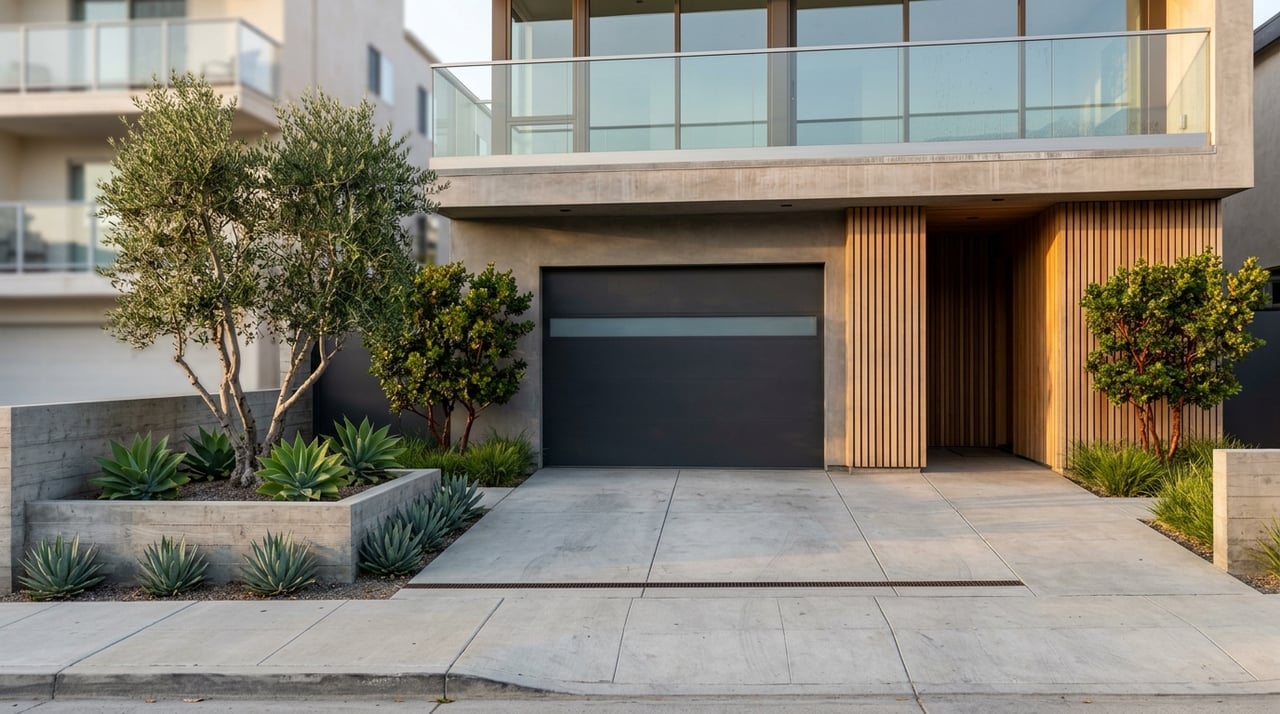
A single-family home in West Hollywood offers a different value proposition. If you want more privacy, more direct control over your property, and a more residential setting, a house may be worth the premium.
The city’s own neighborhood guidance helps explain this distinction. In Norma Triangle, design guidelines reference walls, fences, tall hedges, front-yard living space, and narrow driveways or one-car garages, all of which paint a picture of a more enclosed and house-oriented environment.
West Hollywood West follows a similar pattern. The area includes conservation and overlay controls that were created to manage change after repeated replacement of existing homes with oversized single-family properties.
With a house, you usually gain more say over your outdoor space, building use, and long-term property decisions. You are not working through an HOA for many day-to-day choices, and you are buying into a form of ownership that includes land, which can matter in a supply-constrained city.
Parking can also feel more autonomous, even if it is not always abundant. That said, the experience is not always expansive. In some house-heavy pockets, the city’s own guidelines point to narrow driveways and one-car garages rather than oversized parking setups.
The biggest downside is usually cost. Detached homes are far less common in West Hollywood, and the most residential pockets command a clear premium.
Neighborhood value data shows how sharp that difference can be. West Hollywood West has a typical value around $2.50 million, while Norma Triangle is around $1.50 million. By comparison, Center City is around $790,000 and SoFo is around $1.17 million.
Price is only part of the equation. Your monthly carrying costs may look very different depending on whether you buy a condo or a house.
For condos, HOA dues are a major factor. The Consumer Financial Protection Bureau notes that HOA fees are usually paid separately from the mortgage and can range from a few hundred dollars to more than $1,000 per month. Those fees often cover master insurance for common areas, but you still need your own unit policy.
For homes, you avoid HOA dues in many cases, but you take on direct responsibility for repairs, insurance, property taxes, and ongoing upkeep. That can make a house feel more flexible, but it also means fewer shared costs and more direct exposure when something needs attention.
| Category | Condo | Home |
|---|---|---|
| Purchase price | Often lower | Often higher |
| HOA dues | Usually yes | Often no |
| Exterior maintenance | Shared through HOA | Owner responsibility |
| Insurance structure | Master policy plus unit policy | Owner-managed policy |
| Amenity costs | Often bundled into HOA | Paid separately if desired |
| Control over property | More limited | More direct |
The real takeaway is that a condo may look more affordable at first glance, but the all-in monthly number can rise once HOA dues, insurance, and amenity-rich building costs are included. A home may require a bigger upfront commitment and more maintenance, but it can offer greater control and a different kind of long-term upside.
In West Hollywood, homes have one advantage condos usually do not: accessory dwelling unit potential. The city allows qualifying single-family lots to include one converted ADU and one JADU, or one detached ADU and one JADU.
The city also states that ADU permits are ministerial and that qualifying ADUs do not require off-street parking. For buyers thinking about flexibility, guest space, work-from-home options, or future income potential, that can materially shift the value of owning a house.
This does not mean every home is a fit for an ADU strategy. But if optionality matters to you, it is an important point to evaluate before deciding that a condo is the better value.
In West Hollywood, the condo-versus-home split is often a map question as much as a budget question. Condo-heavy and mixed-use areas are generally found in Center City, Tri-West, SoFo, the Eastside and Santa Monica Boulevard corridor, the Sunset Strip, and the Design District.
The more home-heavy pockets are West Hollywood West and Norma Triangle. That pattern lines up with the city’s planning approach, which treats some areas as active mixed-use corridors and others as more protected residential zones.
You may prefer the condo-oriented micro-areas if you value:
You may prefer the house-oriented micro-areas if you value:
Recent neighborhood-level data shows just how differently West Hollywood’s micro-areas can behave. West Hollywood West is up 0.4% year over year, while Norma Triangle is down 0.7%. Center City is down 2%, and SoFo is down 3.4%.
These numbers do not prove that homes always outperform condos. But they do suggest that land scarcity, privacy, and neighborhood protections may support pricing in the most residential pockets, while condo performance can depend more heavily on the specific building, its HOA, and its exact location.
That is why broad citywide averages only tell part of the story. In West Hollywood, your building, your block, and your micro-area matter a lot.
If your priority is convenience, amenities, and a central location, a condo may be the right move. You may get a lower entry price, more inventory to choose from, and an easier day-to-day ownership experience.
If your priority is privacy, flexibility, and long-term control, a house may justify the higher cost. You may gain more autonomy, more residential buffering, and potential ADU value that changes the ownership equation over time.
The smartest approach is to compare not just price, but also the lifestyle you want to wake up to. In West Hollywood, condos and homes are often not two versions of the same choice. They are two very different ways to live in the city.
If you are weighing a West Hollywood condo against a home and want a more tailored read on micro-areas, inventory, and long-term fit, The Malibu Life can help you navigate the decision with a high-touch, strategic approach.

From Sinkhole Headlines to Sandy Shores: Our Latest Look at Malibu’s Beaches

A closer look at Malibu’s elusive gray foxes

Pickleball is coming to Malibu, and Madison is joining in. Here’s your guide to the Veolia Malibu Showcase, from watching the action to getting on the court.


Here’s your guide to celebrating Halloween in and around Malibu this October.
Here’s what buyers, sellers and renters should know heading into fall.

Discover why buyers are attracted to Central Malibu

Discover three reasons buyers are drawn to East Malibu.

Why space, privacy and easy beach access continue to draw buyers to West Malibu.
A closer look at a just-sold Malibu home

The Malibu Life Team
Madison Hildebrand | CA DRE# 01413280
Jennifer Chrisman | CA DRE# 01325526
24903 Pacific Coast Highway #200,
Malibu, CA 90265